category: Board Games
tags: SPIEL Essen
← I logged 2000 plays on BoardGameGeek
SPIEL Essen 2026 is over and (as always) I was there. Before, I went through all 1410 games in the GeekPreview and selected a mix of family games and gamer’s games.
This year, I played more games than EVER before - this happens when you stay at the same booth for a longer time and just switch to a different table with a different game when you’re finished with the previous one. That happened a lot on day one, where we visited most booths with one specific game in mind, and then just stayed to play a few others.
(and also, kid’s games usually play in a shorter time than gamer’s games)
So especially for the family games: I will not write about all of them, only about those we actually actively picked, and/or really liked.
(some of the games we played were not even published this year)
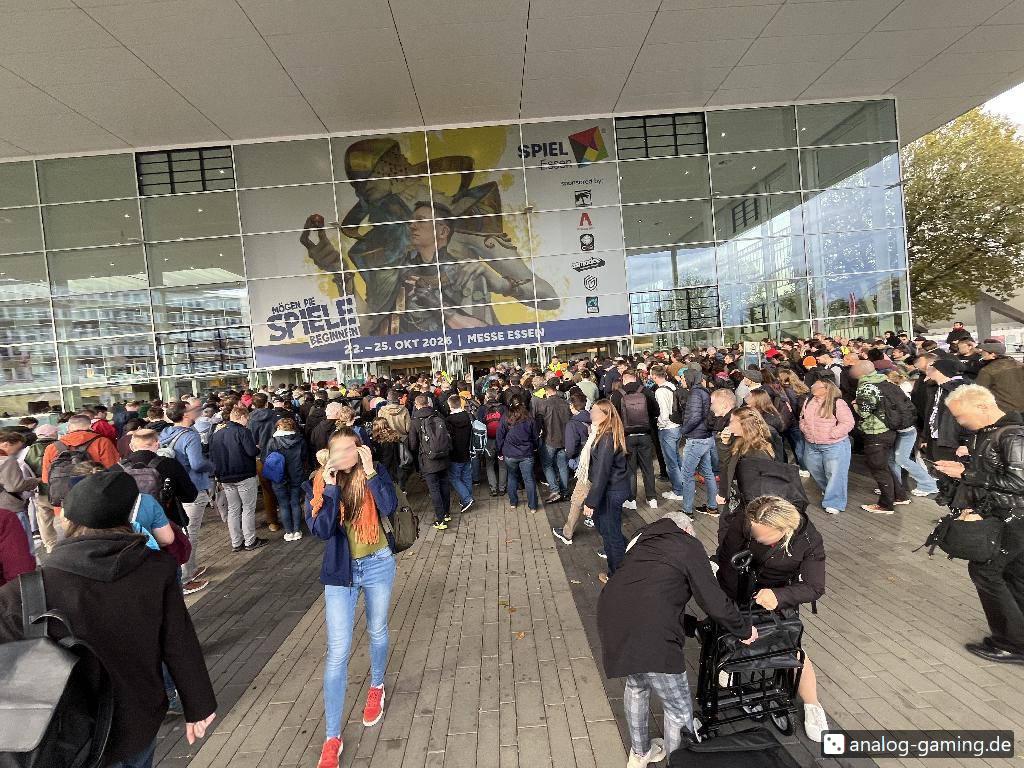
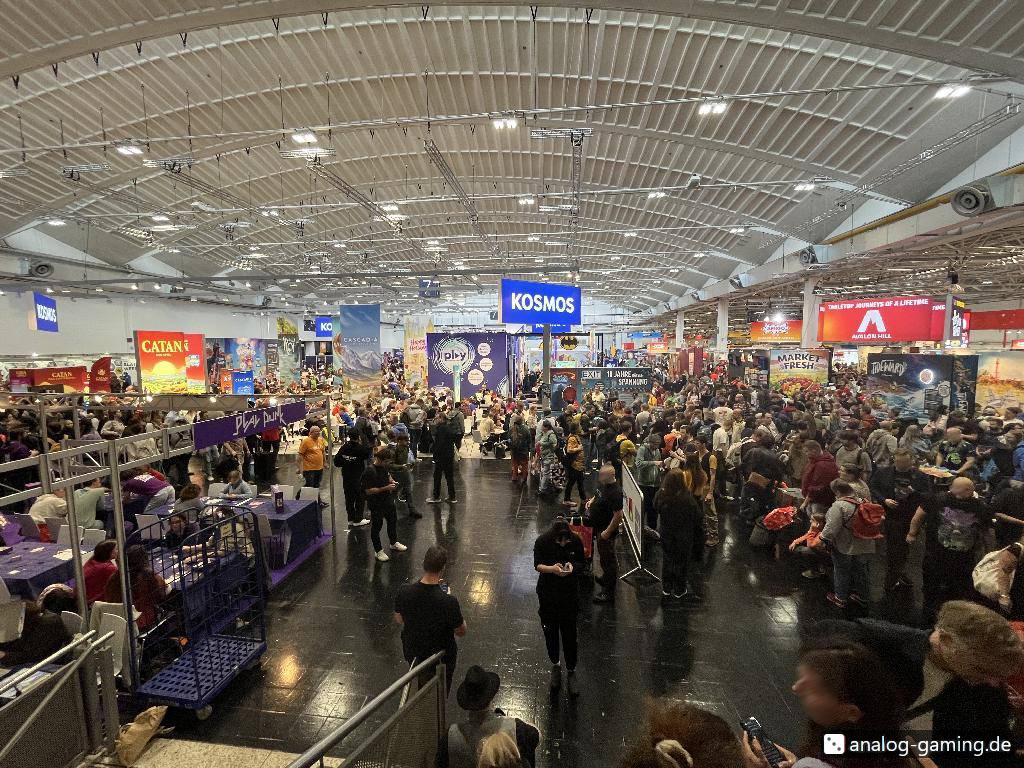
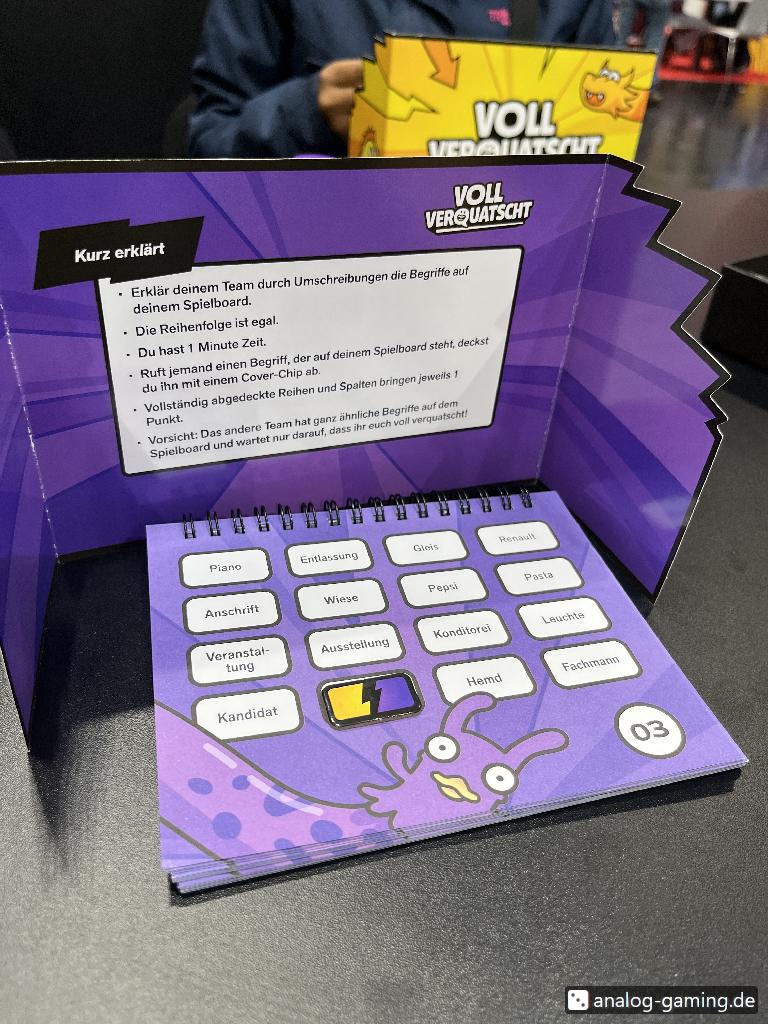
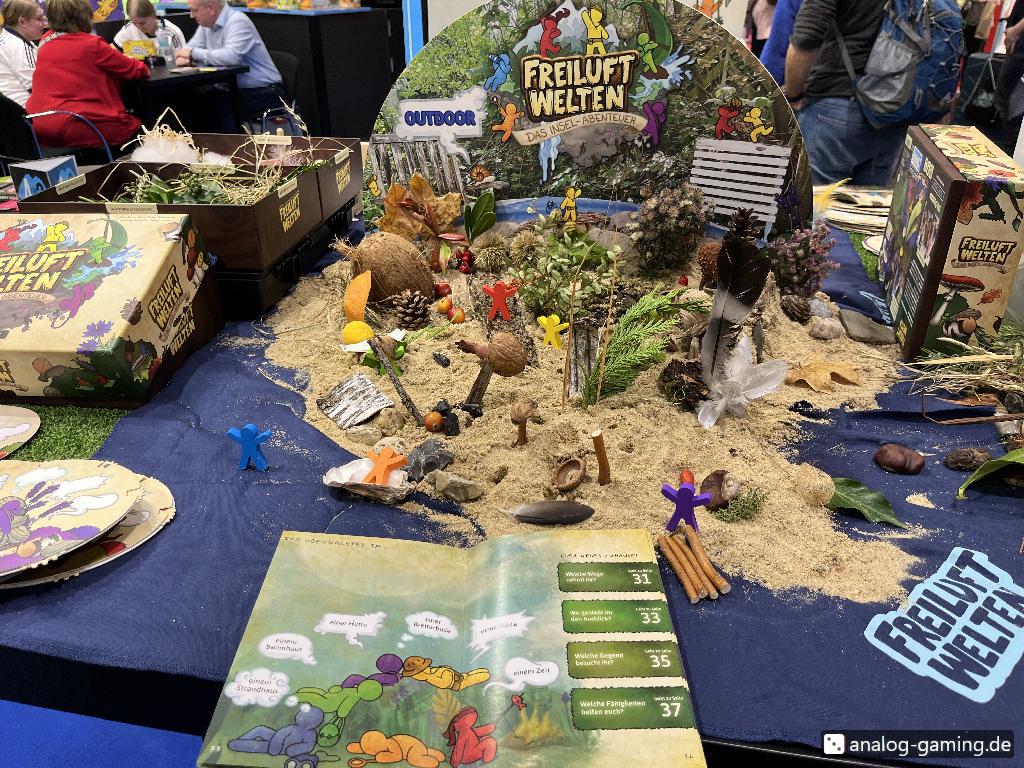


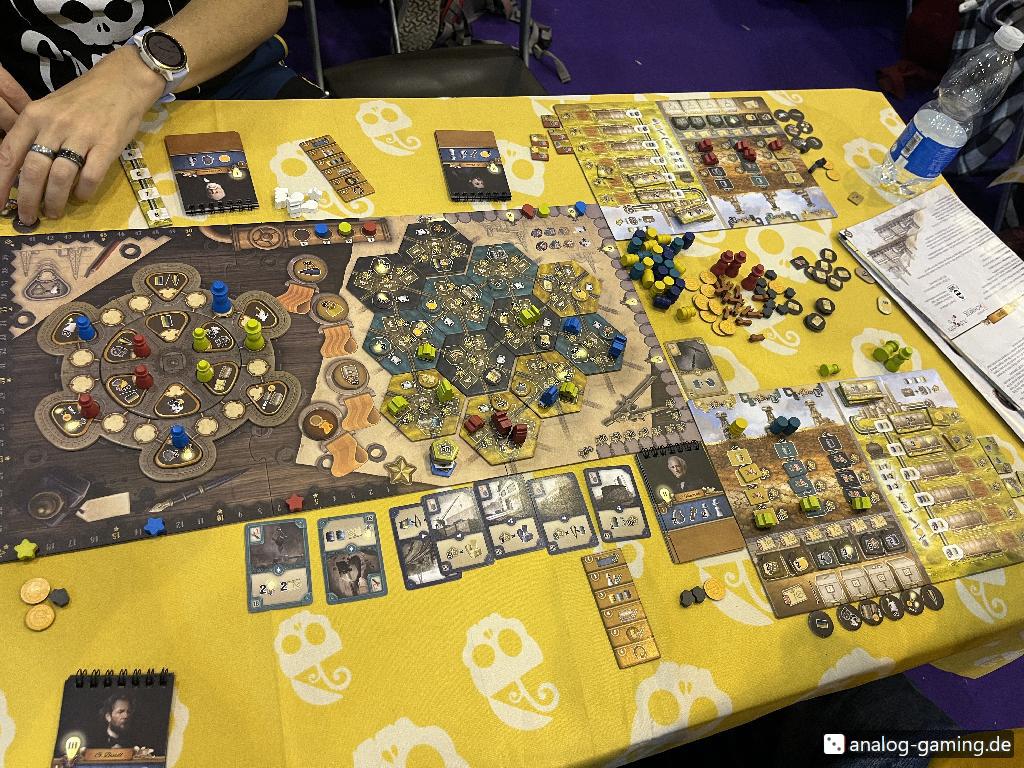
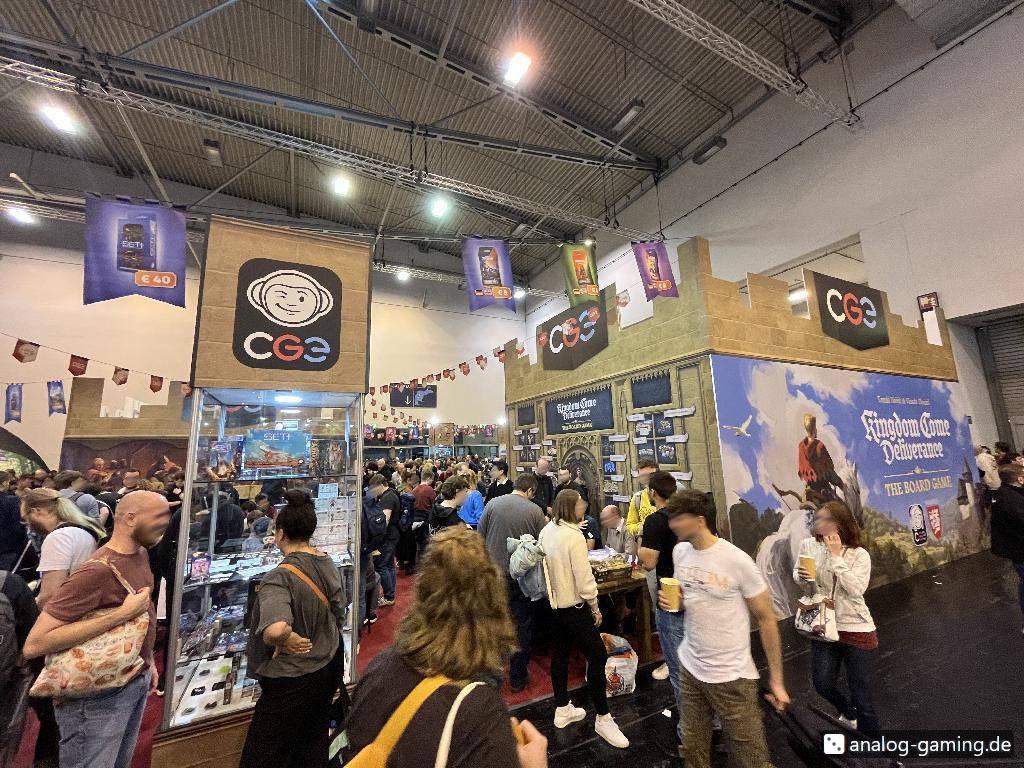
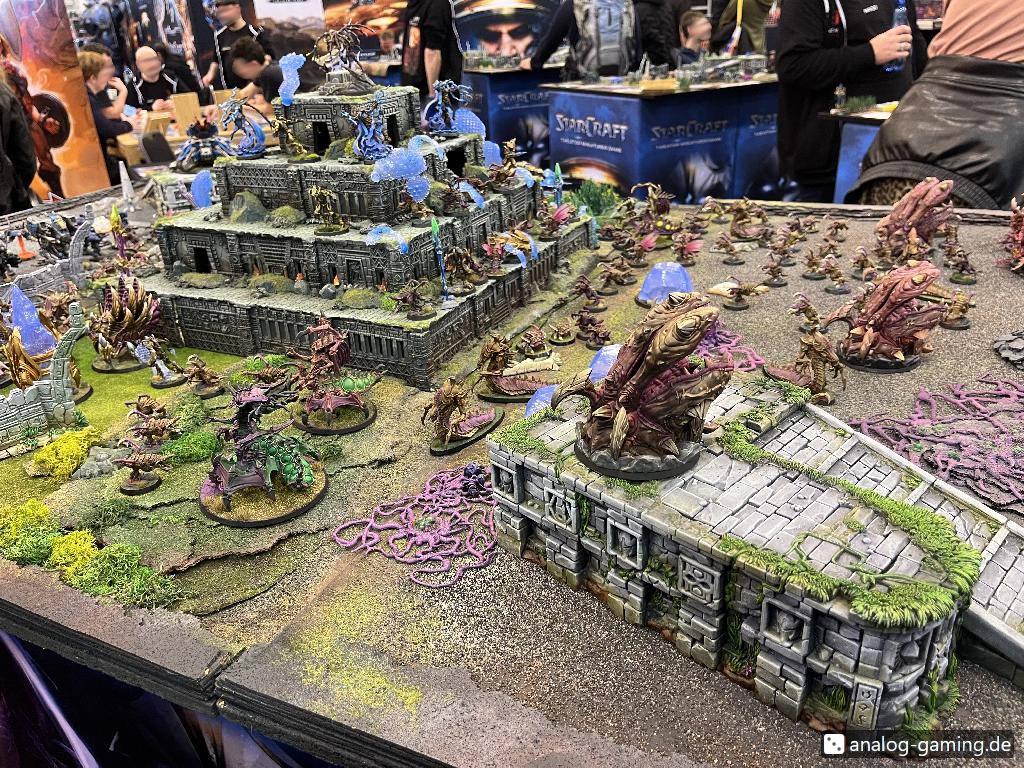
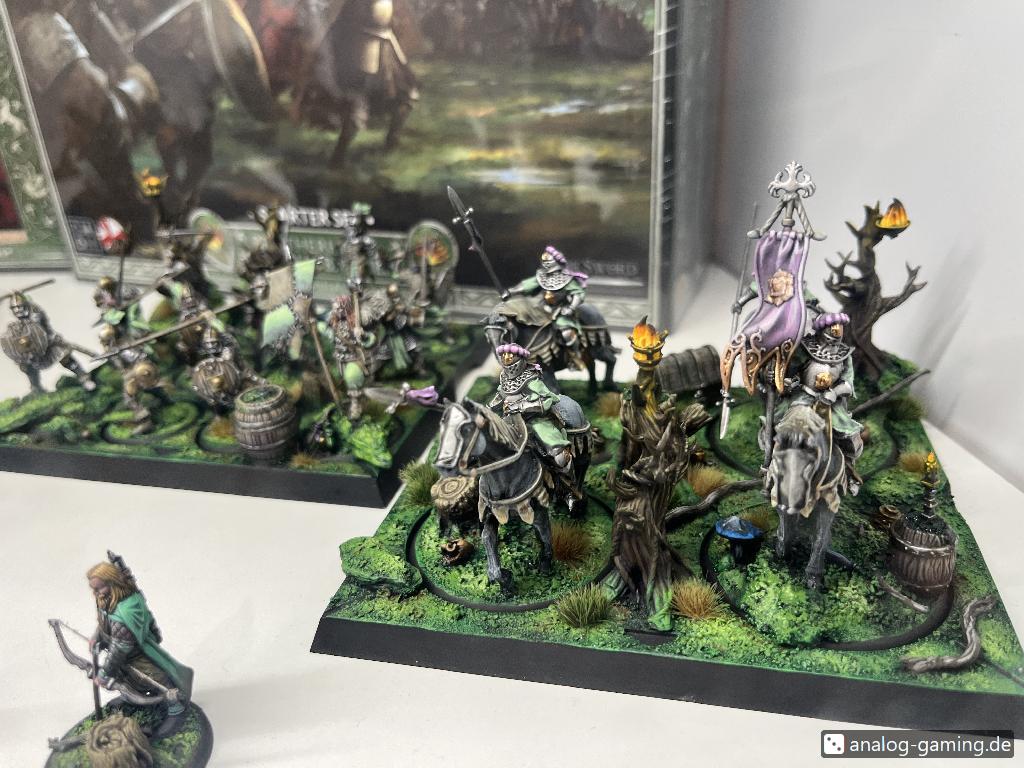
Day 1:
On day 1 I set my all-time Essen record so far and played 12 games!
Similo: Wonders (Horrible Guild)
Similo itself is not new, but there are multiple “editions” with different themes. The one we played was “Wonders” (of the world), which was actually released this year.
It’s a team deduction game. A grid of cards is placed on the table, one player secretly picks one of the cards and the others have to guess it. The player plays more cards from his hand and tells the others if the played cards are similar or not similar to the secret card. The other players have to eliminate cards based on these clues, so that in the end ideally only the secret card remains.
(In the end we didn’t buy Similo: Wonders, but spent enough money in Horrible Guild’s store so they gave us Similo: Board Games ‘26 as a free gift)
Spotlight: Fantasy (Horrible Guild)
Each player gets a different hidden object image with a lot of people on it, and then a card is revealed which shows one of these people. The player’s task is to count how many times that person is shown on the image, and then you get points for it. The caveat is that the image is so dark that you almost can’t see anything, but you get a white cardboard “spotlight” (hence the game’s name) that illuminates a small part of the image. So you have to count the people while moving this spotlight around.
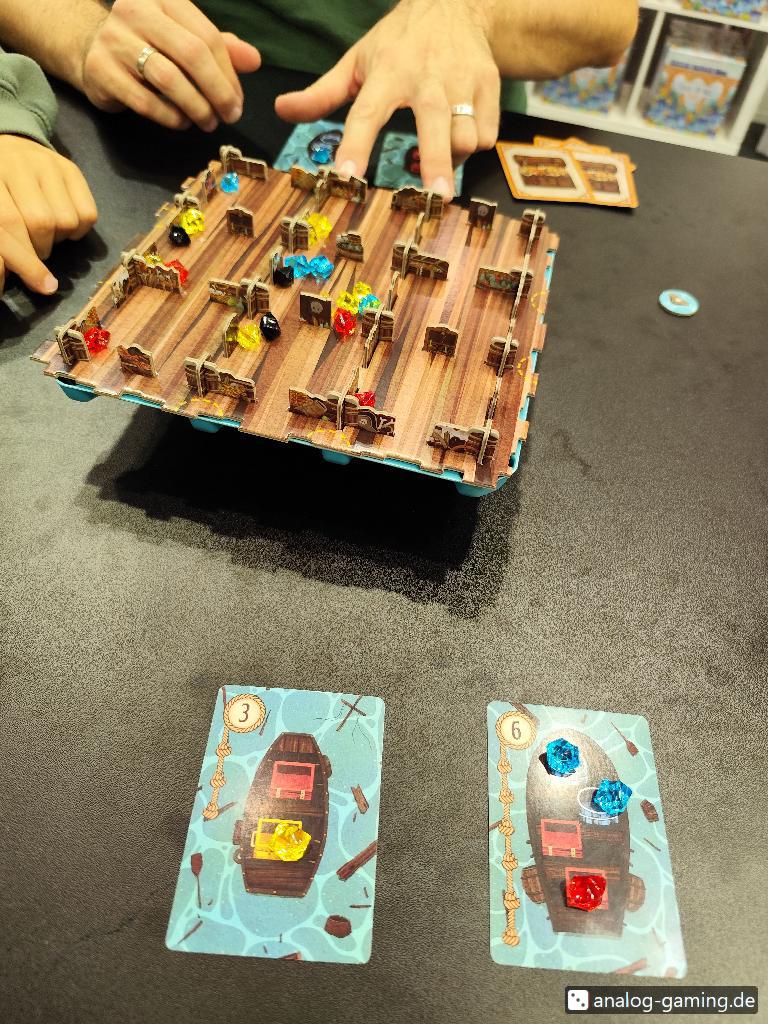
Rocking Raft (Horrible Guild)
A dexterity game. The “game board” is a cardboard raft with multiple “rooms” filled with gems. In your turn, you tilt the raft and get all of the gems that fell off. Then you have board cards with colored spots, and you have to distribute the gems to these cards (and IIRC, you only get victory points for full cards).
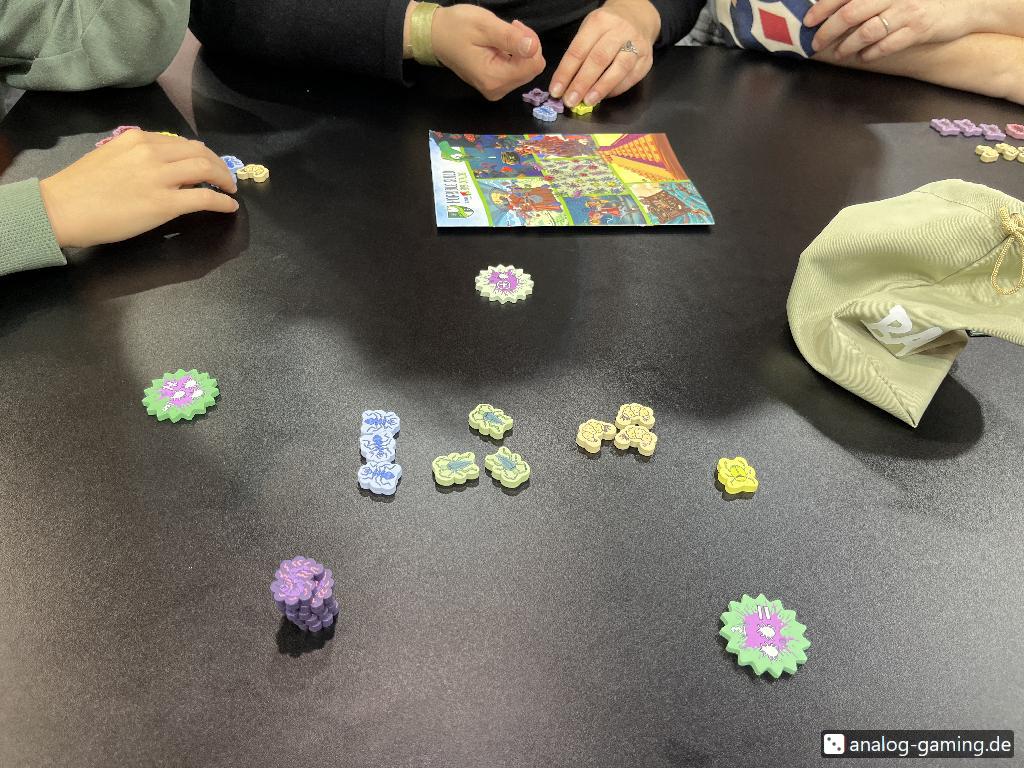
Bag of Bugs (Horrible Guild)
I don’t know which type of game this is (BGG says “dexterity game”, but it’s not), but I really liked it. As the name says, it consists mostly of a cloth bag with small wooden tokens, which look like multiple kinds of bugs:
- larvae count 3 points per token
- scary bugs count negative points, and the player who has most of them in the end gets more negative points
- 5 different types of bugs count 1/3/6 points if you have 1/2/3 of them, but zero if you have more than three of them
Each round, one player draws one bug at a time from the bag, and the other players pick a “grab token” in realtime, which determines how many bugs they are allowed to take (“one of the kind with the largest number” / “two of the same kind” / “up to three, each of a different kind” etc.) and in which order. Multiple rounds are played, and each round someone else draws from the bag.
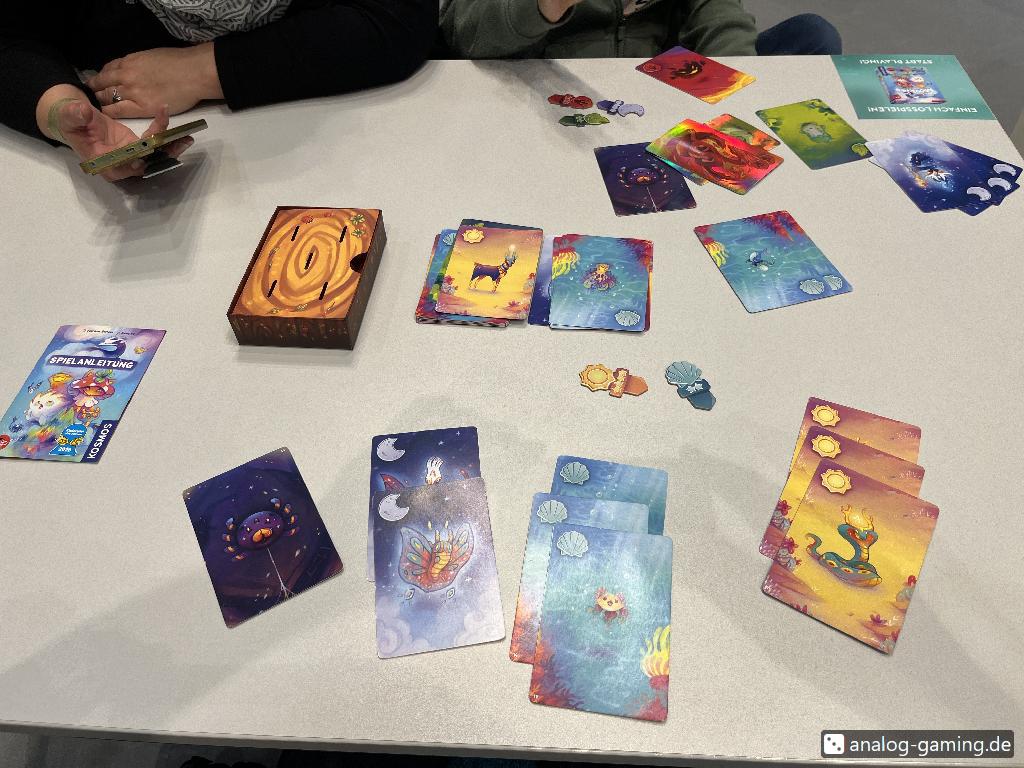
Mooki Island (KOSMOS)
We didn’t know about this game before, we picked it because it won the Kinderspiel des Jahres 2026 award.
It’s a 2-player game for smaller kids (age 4+). You have two stacks of cards, each player picks one card at a time, looks at both sides and decides which one to keep.
The card shows either a mooki (then you place it on a stack in front of you) or a spider (then you place it on your opponent’s stack).
When all cards are distributed, you sort the mookis by family (a symbol on the cards, there are five different families) and determine which player has the higher number of symbols per family. That player gets the family’s trophy, which is worth victory points. The player with the most spider cards has to discard a trophy.
It’s a light game, but not too light (e.g. you have to keep track of your won cards because you’re not allowed to look at them) and kids love the cute characters on the cards.
Day 2:
I was there alone to play games for myself:
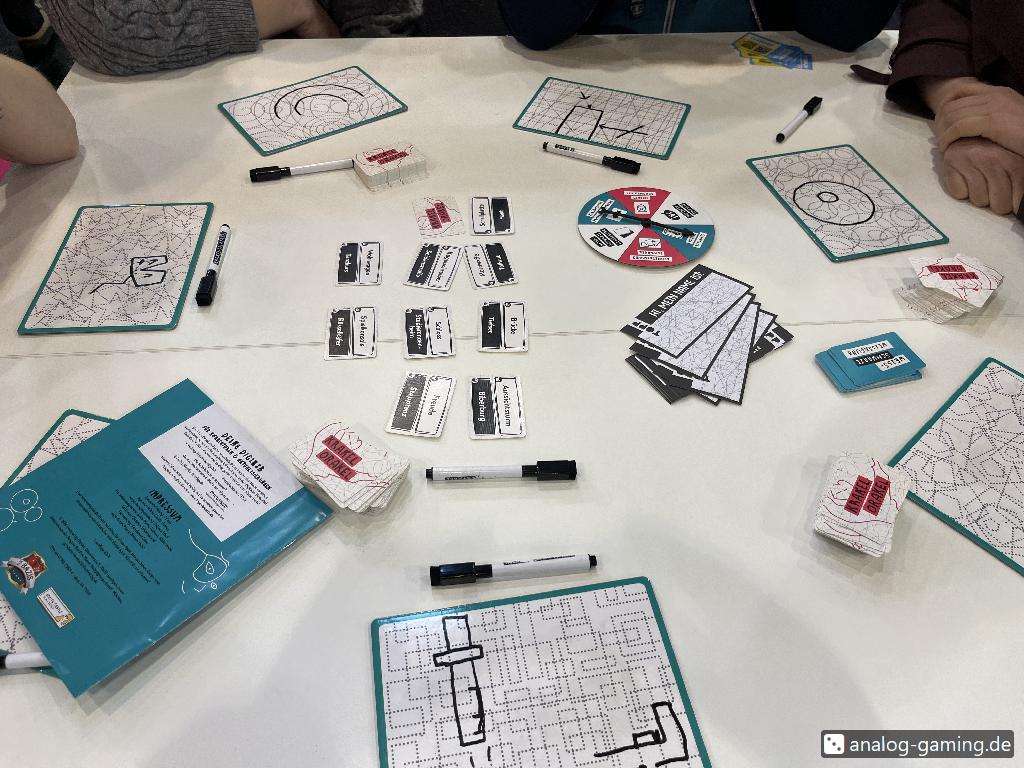
Krakel-Spektakel (frechverlag)
A drawing party game. Each player gets a card with a word, and has to draw that word on a dry-erase board with pre-printed random lines…and you may draw ONLY on the pre-printed lines.
(if you look at image 10 in the gallery, and my dry-erase board in the foreground: the word on my card was “murder weapon”, and I tried to draw a bloody knife and a gun…on a board where all pre-printed lines were rectangles)
Then the player’s cards are shuffled with additional cards, and the players have to cooperatively flip the cards they think nobody drew.
So far, these were the rules of Krakel-Orakel, a previous game by the same authors and the same publisher.
Krakel-Spektakel uses the same rules, but also includes a spinner which adds variants like “all your drawn lines must be connected”.
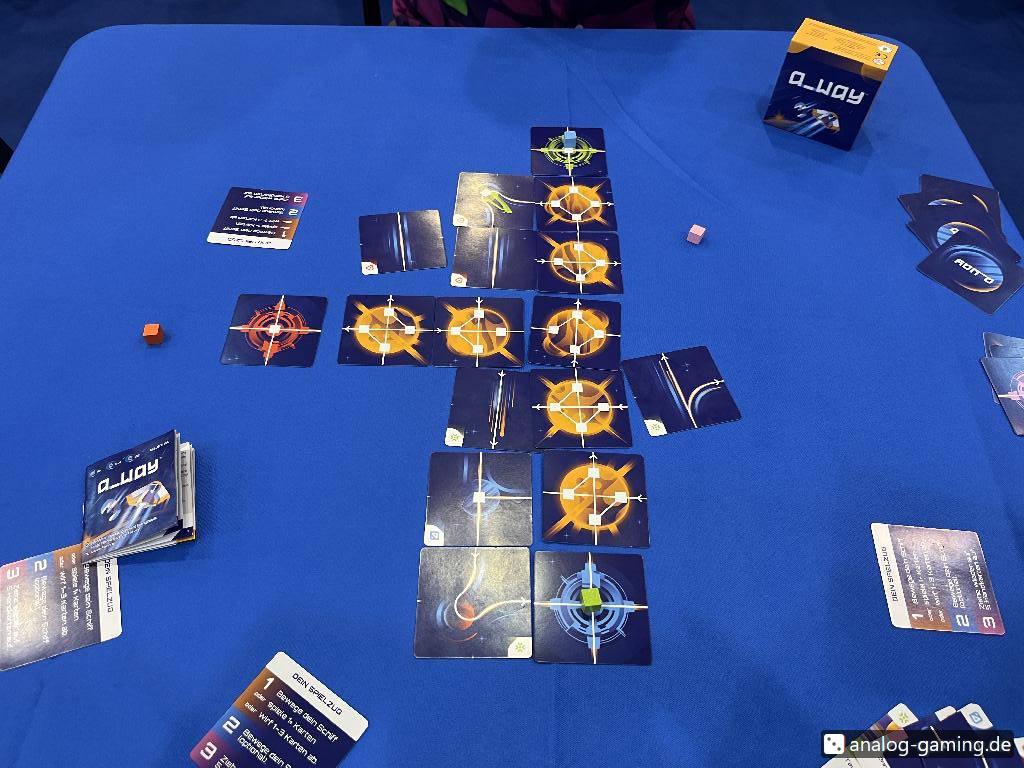
a_way (Blue Orange Games)
A racing and network building game in a tiny box. A few random cards are laid out in a line, the cards show routes and some one-way arrows. The player place their spaceship one one end and have to reach the other end, but they start at the opposite ends, so they must use the same path in opposite directions.
During your turn, you a) move your spaceship and b) play cards that let you move/swap/add cards on the table, so you actually get a legal path from your spaceship to your destination card.
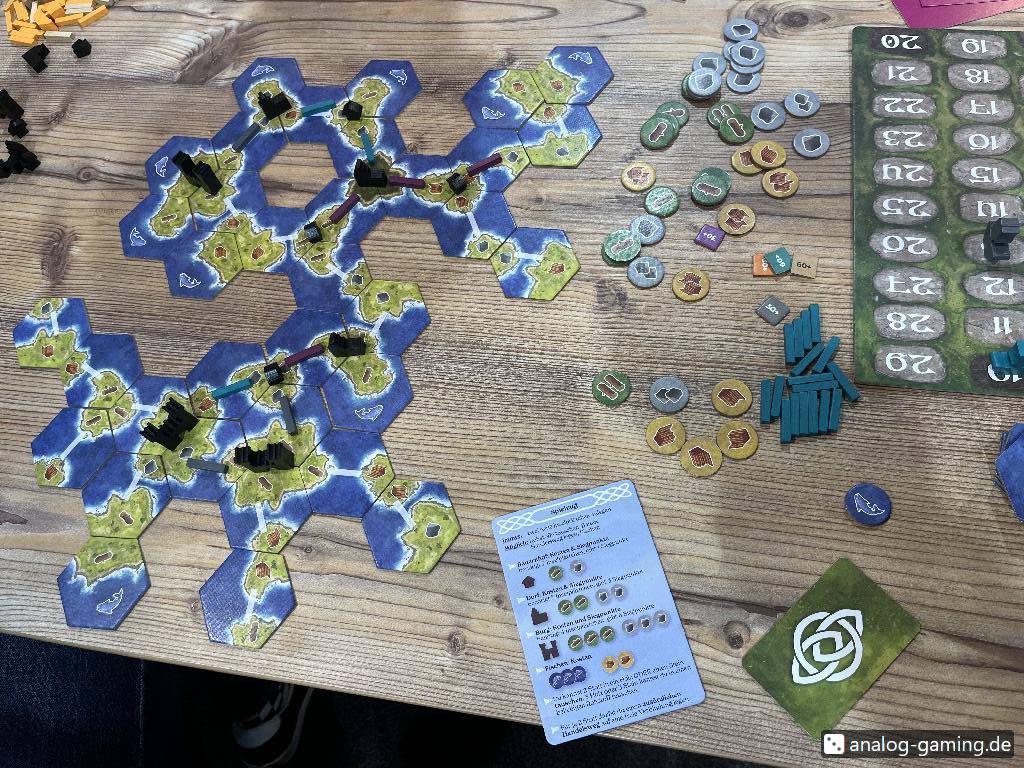
Orkney: Die schottischen Inseln (ArsEdition)
I decided to check it out because of the Scotland theme. It’s a tile-laying game where you explore the Orkney Islands. Each tile contains parts of multiple islands with resources printed on them, if you add a tile to an island that already has the resource printed on the tile, you get two units of this resource.
You use the resource to build buildings on the islands (three different types, which score victory points immediately) and trade routes between the islands, which score victory points at the end of the game.
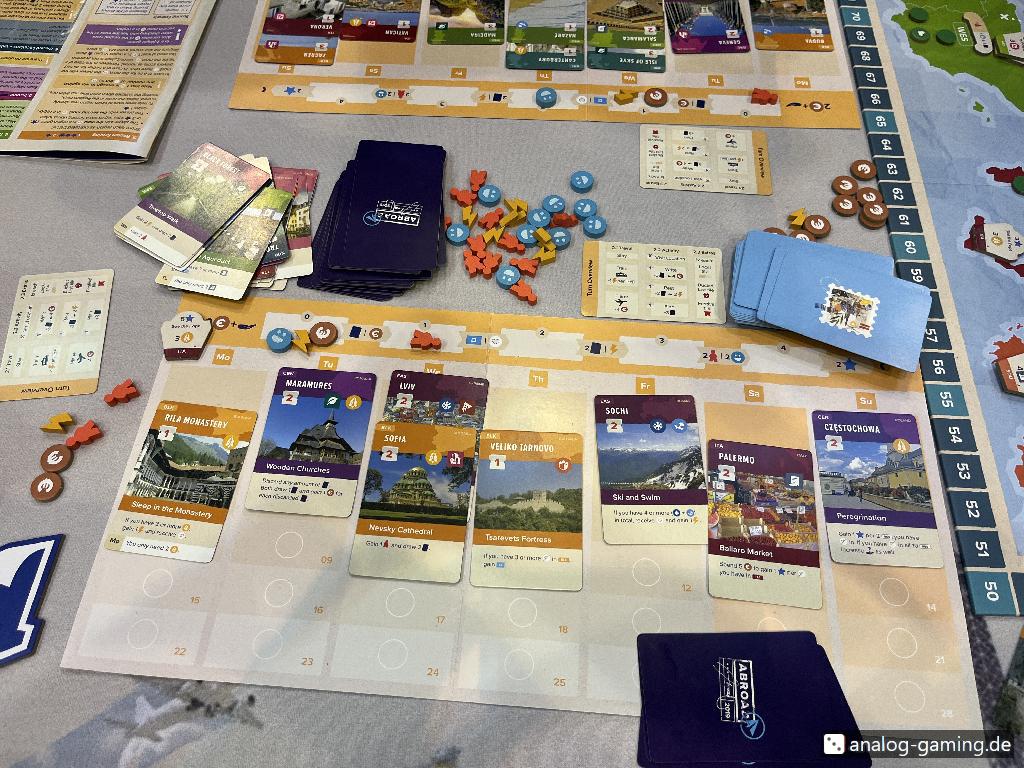
Abroad (Portal Games)
I didn’t know this when I played the game, but apparently this was published last year. I was even at the booth last year, but didn’t notice Abroad.
In Abroad, you are a travel blogger, and travel the world by playing location cards on your player board. The board is basically a calendar with four full weeks, and each of these weeks is a round where you try to play as many card on your board as possible. The cards have a number on them, which is the number of days you stay there, and if your current card’s location is far away from your last card’s location, you also spend days to travel there.
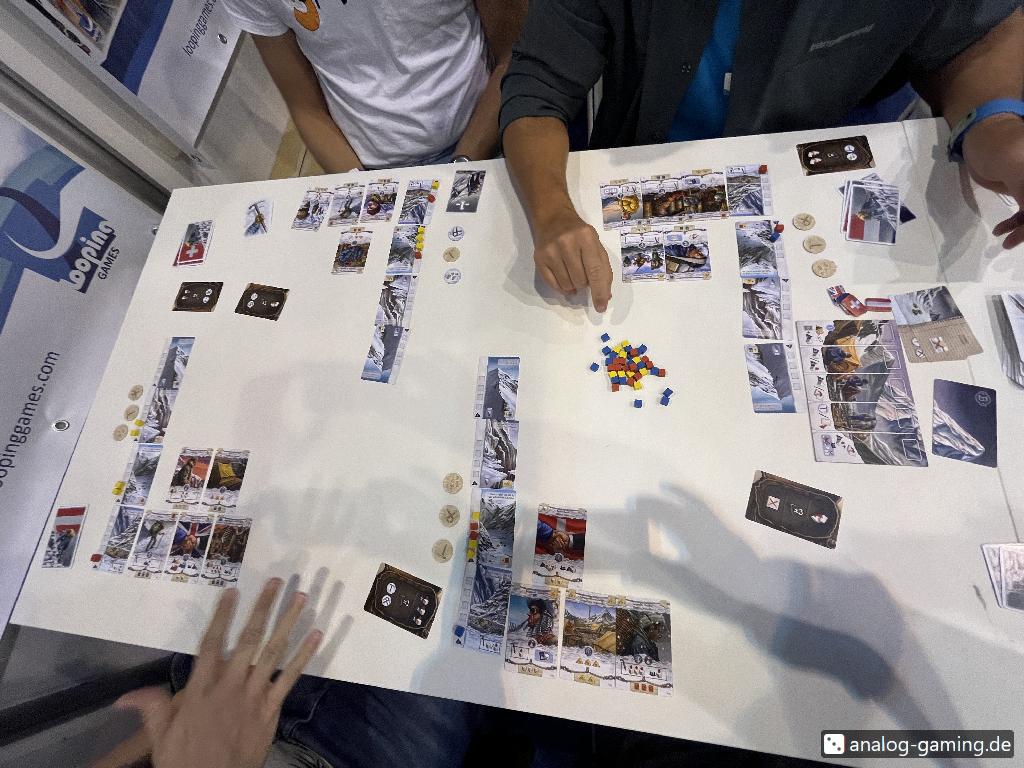
1953 Everest (Looping Games)
The newest addition to Looping Games’ 19xx series. The theme is that you want to climb Mount Everest as fast as possible, and to do this, you need to build a pyramid of cards (climbers) in front of you. The “mountain” has four levels, so to get a card on the top level, your pyramid must be four cards wide at the bottom. The problem is that you need to pay resources for the cards, and to play a card on level 3, you first have to move the required resources up to level 3.
Oil Rock (Cranio Creations)
I love economy games, and this one caught my eye in the GeekPreview. It’s about drilling/refining oil, and it’s a worker placement game, with a rondel/wheel where you place the workers.
You move on the central board to get bonuses and build new offices, and you can build drills, turbines and refineries on your player board, all of which determine how much oil you produce.
And then I went checking out kid’s games again, because I already had bought some as Christmas presents, but still needed to buy one more:
Wombat Tower (Blue Orange Games)
The eponymous tower is a dice tower which is placed in the middle of the game board. There are multiple types of wooden enemies that try to attack the tower. The players take turns to rotate the tower, put a die in it and try to knock enemies from the board with that die.
After that, the die result determines if new enemies are placed on the board or if existing enemies advance towards the tower.
Not So Fast (Blue Orange Games)
A racing game with hares and tortoises in multiple colors. The players draw cards which lets them move pawns by color or animal type. All players can move all pawns, but get assigned a secret color in the beginning, and have to make sure the animals in this color get the most points.
The caveat is that there is a limited number of scoring spaces at the end of the track, and the scores increase.
So you don’t want the pawns of your own color arrive first, because they would get more points on the later scoring spaces…but if your pawns arrive too late, all spaces are full and you don’t get any points at all.
Pets on Mars (HABA)
A beautifully illustrared cooperative push-your-luck game where you pack stuff on rockets that then fly to Mars. The players take turns to reveal cargo pieces - luggage, robots, snack machines, UFOs and the pets themselves, in space suits.
Here’s the push-your-luck part - they have to decide when to stop, because all pieces must actually fit into the cardboard rocket. If they picked too many pieces, they lose fuel, and they can only lose a few fuel before they lose the game altogether.
Tabletop
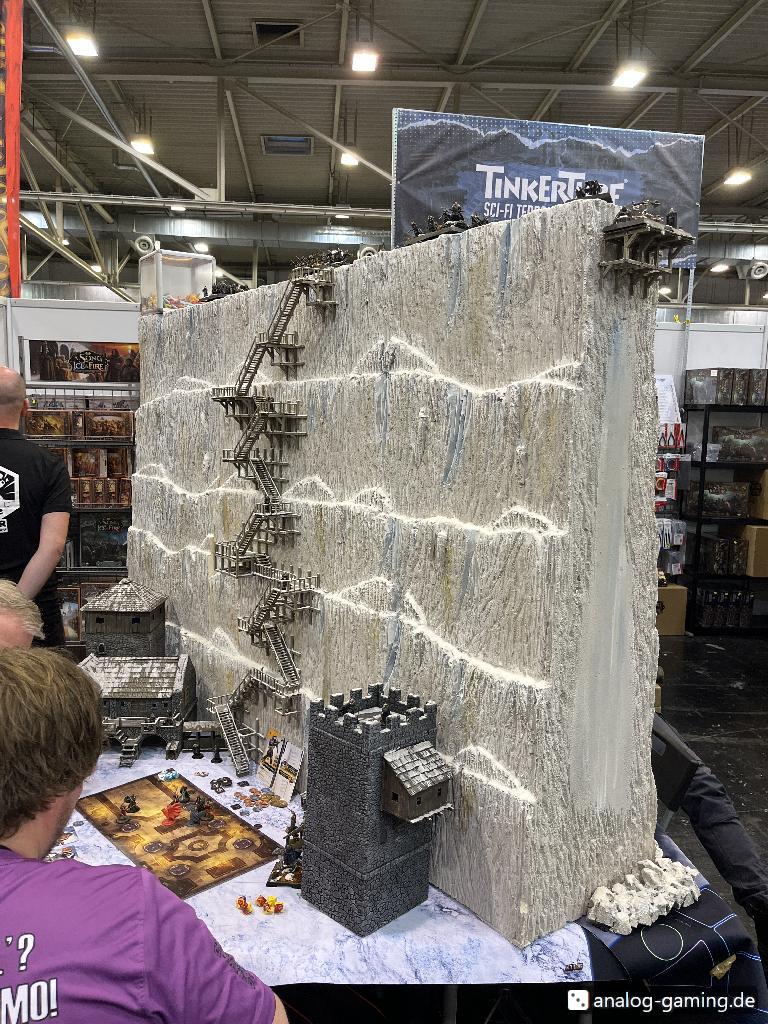
Nothing special this year. I didn’t have much time for the tabletop hall (and I already own enough unpainted models for the rest of my life), so I just wandered across the hall to look at beautiful models and terrain.
